


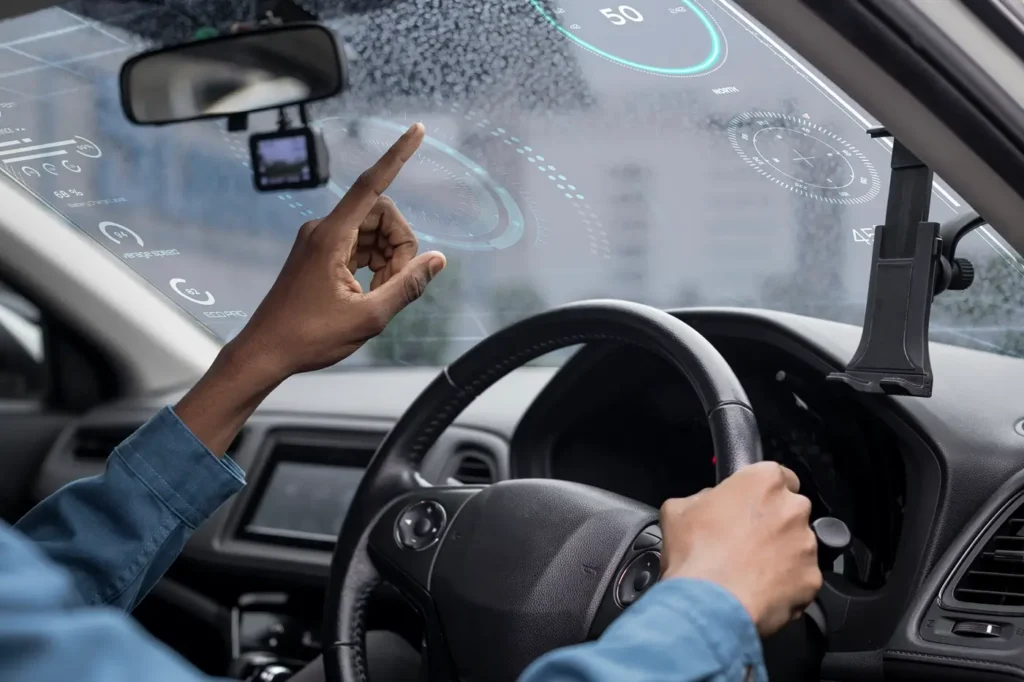
Self-driving vehicles are moving from science fiction to reality. Over the coming years, autonomous passenger services could fundamentally change how many of us travel. At Open Road Access (ORA), we’re watching autonomous vehicle accessibility developments closely, because for disabled people this shift presents both enormous opportunity and important, unanswered questions.
We’re excited about the potential. But we’re equally clear that accessibility cannot be something added afterwards. It needs to be designed into autonomous passenger services from the very beginning, not bolted on once the technology is already on the road.
Why This Matters?
Imagine being able to travel independently without needing to find an available driver. Imagine greater access to work, healthcare, education, and social activities, or simply making an unplanned journey whenever you choose. Around 24 percent of the UK population is disabled, and for a huge number of people, that kind of everyday freedom still isn’t guaranteed.
Transport is consistently one of the barriers that shows up first, before someone can even get to the job interview, the appointment, or the social event that everything else depends on.
Also Read: Renting a Wheelchair Accessible Vehicle for Rehab Travel
Done well, autonomous vehicle accessibility could offer real independence and flexibility for many disabled people. Self-driving vehicles could provide greater choice and flexibility for passengers, including during unsociable hours, and could help improve mobility, accessibility, and independence in rural communities where transport options are already limited.
It’s a genuinely rare moment in transport policy where accessibility could be built in from the start rather than campaigned for after the fact. But that future only arrives if accessibility sits at the heart of how these services are designed, regulated, and introduced, rather than retrofitted once the decisions have already been made.
Where UK Policy Stands Right Now?
The legal groundwork is already moving fast. The Automated Vehicles Act became law in 2024, and the government has been working toward allowing commercial self-driving ride-hailing services on UK roads, with pilots of self-driving passenger vehicles fast-tracked for small-scale trials.
Government safety cases for autonomous vehicles have leaned heavily on the fact that human error contributes to the vast majority of road collisions, which is a genuinely strong argument for the technology itself.
What’s less settled is accessibility. The Department for Transport has made what’s been described as a non-statutory commitment to establishing an Automated Passenger Services Accessibility Advisory Panel. ORA is part of that panel, working alongside policymakers, engineers, and other transport providers to help shape what accessibility requirements should look like before these services reach UK roads at scale.
Accessibility Means Much More Than A Wheelchair Space
When people think about accessible autonomous vehicles, they often picture ramps and wheelchair users. In reality, accessibility is far broader.
How will someone communicate with the vehicle? What happens if they need assistance? How will blind or partially sighted passengers interact with booking systems? How will people with learning disabilities feel confident using the technology? What happens if something unexpected occurs during the journey?
These questions are just as important as the technology itself. A vehicle that can navigate a busy street safely but leaves a passenger unable to summon help, or unable to book a journey in the first place, hasn’t solved accessibility. It’s simply moved the barrier somewhere less visible.
The Opportunities Worth Getting Right
It’s worth being clear that this isn’t a piece about why autonomous vehicles are a bad idea. For many disabled people, not being able to drive is one of the biggest barriers to independence there is.
Self-driving vehicles built with genuine autonomous vehicle accessibility from day one could change that in ways very few other developments in transport ever have, from unplanned journeys at short notice to better connections in areas where accessible public transport barely exists.
The opportunity is real. What we’re arguing for is that autonomous vehicle accessibility isn’t wasted by treating it as a feature to consider later, once the core technology is already fixed in place.
Why We’re Asking
As part of our wider policy work, ORA sits on the Automated Passenger Services Accessibility Advisory Panel, contributing directly to discussions around the future accessibility of autonomous passenger services.
One thing we’ve learned throughout that work is that lived experience nearly always identifies issues that policymakers, engineers, and transport providers haven’t considered. The questions that matter most to autonomous vehicle accessibility rarely come from a lab. They come from people who already navigate transport barriers every day.
That’s why we’re asking now, before these services become widespread, rather than after the design decisions are already locked in.
Also Read: Short-Term vs Long-Term Wheelchair Accessible Vehicle Hire
What Do You Think?
Are you excited about autonomous vehicles?
Would they increase your independence?
Or do you have concerns that need to be addressed first?
Some questions we’d particularly love your thoughts on:
- Would you feel confident travelling alone?
- What would make you trust an autonomous vehicle?
- What accessibility features would be essential?
- What concerns you most?
- What opportunities do you think people are overlooking?
There are no right or wrong answers here. We aim to make sure disabled people’s experiences shape autonomous vehicle accessibility from the outset, not simply respond to it once decisions have already been made.
If you’d like to share your views on autonomous vehicle accessibility, we’d love to hear from you.
Whatever shape autonomous vehicle accessibility takes over the next few years, we think the measure of success is simple. Would a disabled person, travelling alone, actually choose to use it? Not because they had no other option, but because it genuinely worked for them, from booking through to arrival.
That’s the bar we’d like to see the whole industry held to, and it’s the bar we’ll keep raising in our own policy work as this technology moves closer to UK roads.
.
Follow Us
Google Map Link: https://maps.app.goo.gl/RSUdTXfbeYSmCU9A7
Facebook Link: https://www.facebook.com/openroadaccess/
Instagram Link: https://www.instagram.com/openroadaccess/
LinkedIn Link: https://uk.linkedin.com/company/open-road-access/
YouTube Link: https://www.youtube.com/@OpenRoadAccess
