


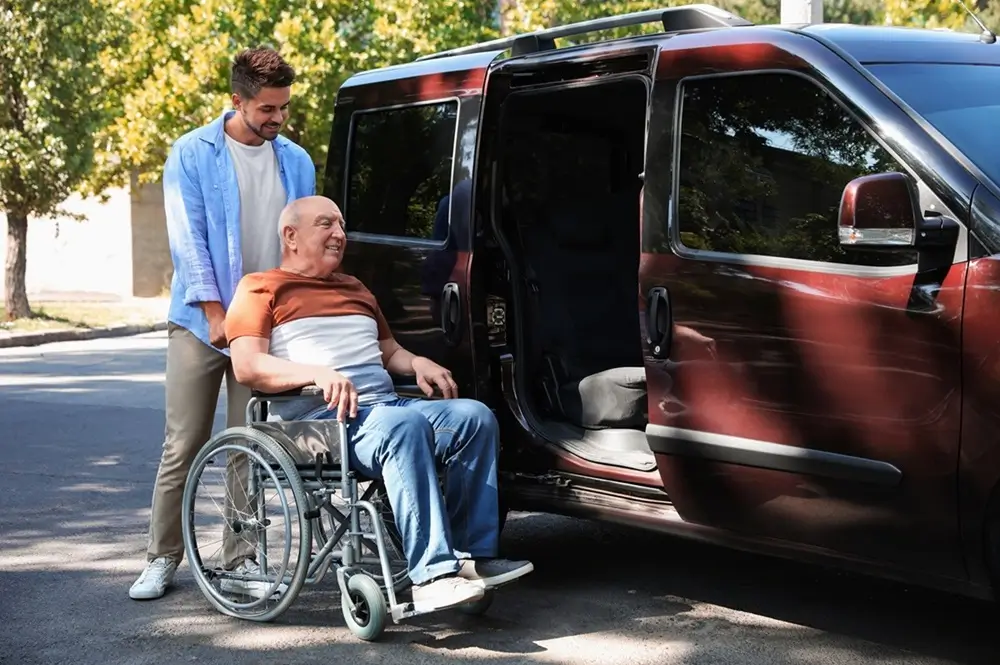
Discharge from hospital or inpatient rehabilitation is a major milestone. But getting someone clinically ready to go home is not necessarily the same as having everything in place for them to do so safely and successfully.
One practical question can easily become a significant barrier: how will they actually get home – and how will they travel once they are there?
For someone recovering from a spinal cord injury, acquired brain injury, stroke or other serious illness or injury, the car they used before admission may no longer be suitable. They may now use a wheelchair, have difficulty transferring, be unable to drive temporarily, need another person to drive for them, or require different vehicle features as their rehabilitation progresses.
Transport therefore needs to form part of discharge planning.
If you’re a clinician or other professional working within a hospital or rehabilitation centre, a case manager coordinating someone’s return to the community, or a solicitor supporting a client approaching discharge, it is worth considering their transport needs before the date they are due to leave.
And importantly, the answer does not always need to be buying a vehicle.
Why transport should be considered during discharge planning
A great deal has to come together before someone can return home following a serious injury or illness.
Their home may need adaptations. Equipment and care packages may need to be arranged. Community rehabilitation and therapy appointments may need to be scheduled. Family members may need training or additional support.
Transport connects many of these elements; getting home is only the first journey.
In the days and weeks afterwards, the person may need to travel to physiotherapy, occupational therapy, outpatient appointments or other rehabilitation. They may want to visit family and friends, return gradually to work or education, or simply begin rebuilding the everyday routines that contribute to independence and participation.
Without appropriate transport, a carefully constructed rehabilitation plan can become much harder to put into practice.
That is why we believe the question shouldn’t simply be “How do we get this patient home?”
It should be:
“What transport will this person need when they leave, and how might those needs change during their rehabilitation?”
Transport needs can change significantly during rehabilitation
This is particularly important following conditions and injuries where mobility and function may continue to change.
For example, someone recovering from a stroke may initially be unable to drive but hope to return to driving later. They may need a family member or carer to drive them during the interim, or require adaptations if and when they begin driving again.
Following a spinal cord injury, someone may need to travel in their wheelchair and therefore require a wheelchair accessible vehicle (WAV). Alternatively, they may be able to transfer into a car but need sufficient space to transport their wheelchair or other equipment.
Someone recovering from an acquired or traumatic brain injury may remain physically able to use a conventional vehicle but benefit from features that make journeys easier or reduce the demands associated with driving.
Other neurological conditions, amputations and serious injuries can create their own combinations of requirements. The appropriate solution at discharge may therefore be very different from the vehicle someone ultimately chooses six or twelve months later.
This is one reason flexible vehicle hire can be particularly useful during rehabilitation: it can provide a solution for the period of uncertainty between leaving hospital and establishing someone’s longer-term transport needs.
What vehicle options should rehabilitation teams consider?
“Accessible vehicle” does not necessarily mean a WAV.
The right option depends on the individual’s mobility, ability to transfer, wheelchair or mobility equipment, driving status, family circumstances and rehabilitation goals.
Broadly, there are three categories that teams may want to consider.
1. Wheelchair accessible vehicles (WAVs)
A WAV enables someone to enter and travel in the vehicle while remaining seated in their wheelchair.
These vehicles can be particularly important where transferring from a wheelchair into a conventional car seat is difficult, unsafe, uncomfortable or simply impractical.
WAVs come in different sizes and configurations, so teams should consider factors including the dimensions and weight of the wheelchair, the passenger’s seated height, the number of other passengers and the equipment that needs to travel with them.
For someone being discharged using a wheelchair for the first time, vehicle matching and a proper handover are particularly important. A family member being told that they need a WAV does not necessarily mean they will know which WAV they need or feel immediately confident using one.
2. Adapted cars
Some people can transfer into a standard car seat but require adaptations to drive or travel comfortably.
Depending on the individual’s assessment and needs, adaptations can include features such as hand controls, steering aids, left-foot accelerators or equipment to help load a wheelchair into the vehicle.
An adapted car may therefore provide greater independence without requiring someone to travel in their wheelchair.
For people progressing towards a return to driving, temporary access can also avoid forcing a permanent purchasing decision while their abilities and requirements are still developing.
3. Standard cars with accessibility and driver-assistance features
Sometimes the appropriate vehicle isn’t visibly “adapted” at all.
A person may be able to use a standard car but benefit from selecting a model with features such as automatic transmission, lane assistance, parking assistance, fatigue or driver-attention monitoring, easy access, supportive seating or a large boot for mobility equipment.
The key is to start with what the individual needs the vehicle to enable, rather than assuming a particular vehicle category.
The immediate challenge: getting someone home
Discharge dates can change quickly, and transport isn’t always identified early enough. That can leave rehabilitation teams trying to find an appropriate solution at relatively short notice.
Open Road Access (ORA) can deliver accessible, adapted and suitable standard vehicles nationwide, including directly to hospitals and rehabilitation centres, with delivery potentially available from as little as 48 hours’ notice, subject to vehicle availability.
This creates the possibility of arranging the vehicle around the discharge itself.
Rather than organising transport solely for the journey home and then starting again afterwards, a suitable vehicle can be delivered to the rehabilitation centre for the individual, family or other approved driver to use to make that first journey – and then remain with them at home.
A guided handover can help the person driving understand the vehicle and relevant accessibility features before leaving. ORA’s existing rehabilitation proposition also includes insurance for multiple drivers, which can be useful where transport is shared between family members or carers.
Think beyond the discharge journey
The period immediately after discharge is often exactly when flexibility matters most.
A taxi or specialist transport service may be appropriate for individual journeys. Purchasing a vehicle may make sense once long-term needs are established. Other people may eventually access a vehicle through Motability.
But there can be a gap between these options.
Flexible hire can bridge that gap.
At ORA, a vehicle can be provided for days, weeks or months, while longer-term subscription options can support people who need a vehicle for an extended period.
That can be useful where someone is:
- recovering and their mobility is still changing;
- waiting to understand their longer-term wheelchair requirements;
- waiting for a permanent or Motability vehicle;
- considering purchasing an adapted vehicle but wants to establish what works first;
- unable to drive but has family members or carers who can;
- progressing towards returning to driving;
- likely to require a different vehicle later in their rehabilitation.
The principle is simple: the transport solution does not have to be permanent just because the need exists now.
ORA’s rehabilitation offer was designed around that flexibility, including the ability to change or return a vehicle as circumstances change.
Don’t assume the family will know what vehicle they need
Vehicle education is an important part of discharge planning too.
For professionals working in rehabilitation every day, terms such as WAV, boot hoist, hand controls or left-foot accelerator may be familiar.
For someone who has recently experienced a life-changing injury or illness – and for their family – this may be an entirely new world.
They may never have used a wheelchair accessible vehicle. They may be nervous about driving a larger vehicle. They may not know whether the wheelchair will fit, whether the person can transfer, or which adaptations could help.
This is where specialist support can make a significant difference.
Rather than asking the individual or their family to identify a particular make or model themselves, ORA’s transport team can discuss the person’s circumstances and help identify an appropriate vehicle. The service includes a guided handover when the vehicle is delivered.
Also Read: Accessible Minibus Lease: A Flexible Option for Organisations
Consider cost as well as accessibility
For case managers, solicitors and compensators, there is another important consideration: what is the most proportionate way of meeting the transport need?
Regular accessible taxis can become expensive, particularly where someone has frequent rehabilitation appointments or wants to make more spontaneous journeys.
At the other end of the spectrum, purchasing an accessible or adapted vehicle can represent a significant commitment when someone’s long-term requirements have not yet been established. Flexible hire sits between those options.
ORA has developed a transport cost comparison tool to help rehabilitation professionals compare different approaches, including taxi use, vehicle hire and vehicle purchase, and generate an indicative report to support discussion and decision-making.
The cheapest option on paper will not necessarily be the most appropriate for the individual. But understanding the relative costs can help teams make an informed case for the solution they believe best supports someone’s rehabilitation.
A discharge-planning checklist for transport
When a patient or client is approaching discharge, consider asking:
- How will they get home from the hospital or rehabilitation centre?
- Can they safely and comfortably use their existing vehicle?
- Are they able to transfer into a standard car seat?
- Will they need to travel while remaining in their wheelchair?
- What wheelchair or mobility equipment needs to travel with them?
- Who will drive – the individual, a family member, carer or several people?
- What rehabilitation and healthcare journeys are anticipated after discharge?
- Are they likely to return to driving?
- Could their mobility or vehicle requirements change over the coming months?
- Is a permanent vehicle solution known yet, or would a temporary solution preserve more flexibility?
- How does the cost compare with taxis or purchasing a vehicle?
These questions don’t all need definitive answers before discharge. In many cases, uncertainty is precisely why a flexible solution can be valuable.
Making transport part of the rehabilitation pathway
A successful discharge isn’t simply about getting someone through their front door.
It is about giving them the support they need to begin living at home and participating in their community again.
Transport can determine whether someone can attend rehabilitation, maintain relationships, return to activities that matter to them and regain greater control over their everyday life.
For clinicians and rehabilitation centres, case managers and solicitors, considering transport earlier can help prevent it becoming a last-minute obstacle to discharge – or a barrier that only becomes apparent once somebody is already home.
If you are planning a patient’s or client’s discharge and aren’t sure what vehicle they will need, ORA can help you explore the options.
We may not always be the right solution for every client or patient, but our transport specialists are still happy to discuss the person’s mobility, wheelchair, driving and family requirements; identify suitable accessible, adapted or standard vehicles; and arrange nationwide delivery – potentially directly to the rehabilitation centre – from as little as 48 hours’ notice, subject to availability.
The vehicle can then stay with the individual for as long as it is needed, from the immediate period following discharge through the months of rehabilitation that follow.
Getting someone home should be the beginning of their return to everyday life, not the end of the transport plan.
.
Follow Us
Google Map Link: https://maps.app.goo.gl/RSUdTXfbeYSmCU9A7
Facebook Link: https://www.facebook.com/openroadaccess/
Instagram Link: https://www.instagram.com/openroadaccess/
LinkedIn Link: https://uk.linkedin.com/company/open-road-access/
YouTube Link: https://www.youtube.com/@OpenRoadAccess
