


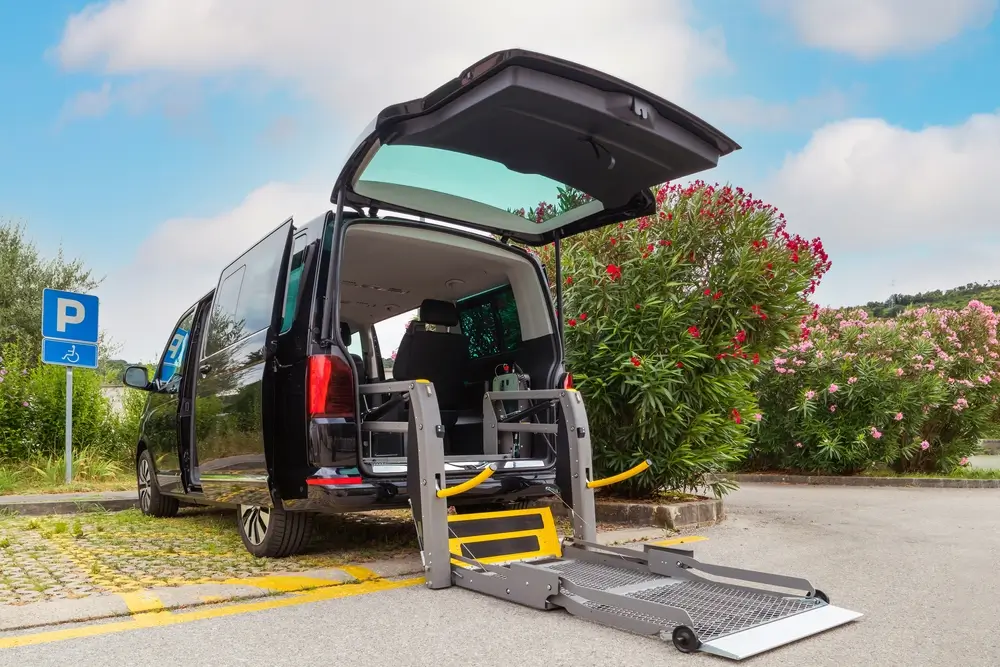
Finding out you are not eligible for the Motability Scheme can be upsetting.
It may feel like you can no longer access suitable transport. For many wheelchair users and their families across the UK, Motability is often the first name people hear. Being outside the scheme can leave you wondering where to turn next. The good news is that Motability is only one route to a wheelchair accessible vehicle, not the only one.
This guide shows the practical options across the UK, from short-term WAV hire to private purchase. It also covers personal leasing and grant-based support, so you can choose what fits your life.
Understanding Motability eligibility in the UK
The Motability Scheme helps people exchange certain mobility benefits for a leased WAV, powered wheelchair, or scooter. A useful scheme, but a tightly defined one.
To join, you usually need one of the following at the higher or enhanced mobility rate:
- Personal Independence Payment (PIP) — enhanced mobility rate
- Disability Living Allowance (DLA) — higher mobility rate
- Armed Forces Independence Payment (AFIP)
- War Pensioners’ Mobility Supplement (WPMS)
- Adult or Child Disability Payment (ADP or CDP) in Scotland — enhanced or higher rate
You also need at least 12 months left on your award when you apply. If your benefit is below that level, or your award has less than a year left, the scheme will not be open. At that time, it will not matter how much you rely on accessible transport each day.
Also Read: Can I hire a WAV while waiting for my Motability car?
Common reasons people fall outside the scheme
Being outside Motability does not mean your need for a WAV is any less real. Common reasons include:
- Your mobility benefit is at the standard or lower rate.
- You do not claim a qualifying benefit at all.
- Your award has less than 12 months remaining.
- You are waiting on a PIP, DLA, or ADP decision or appeal.
- A family member needs a WAV, but the qualifying benefit sits with someone else.
- You prefer to keep your mobility payments as cash and arrange transport separately.
- A recent reassessment reduced your rate.
Any one of these can leave a family with the same question: how do we keep moving safely?
 Check Open Road Access Trustpilot Reviews
Your real options for a wheelchair accessible vehicle
Once Motability is off the table, you have more choices than most people realise. The right route depends on how long you need the vehicle, what you can spend, and how stable your situation is.
1. Short-term or flexible WAV hire
Short-term WAV hire is often the most practical starting point. You pay for the time you use the vehicle and hand it back when you no longer need it — no long contract, no lock-in. It works well for people who are waiting for a benefit decision. It also helps cover medical treatment. It can help if your mobility changes for a short time. It can also help you bridge a gap. At the same time, they decide on a longer-term plan.
This is exactly the space Open Road Access (ORA) is built for. At ORA, we offer flexible WAV hire across the UK. Households can stay mobile for as long as they need. Hire periods can be days, weeks, or months. Return the vehicle when your circumstances change.
2. Buying a used WAV
The used market is one of the strongest routes for households who want long-term ownership without new-vehicle prices. A well-maintained used WAV costs much less and still offers the same key features. These include lowered floors, ramps, winches, and proper wheelchair restraints.
Before buying, always check:
- Who carried out the original conversion, and whether they are a recognised converter.
- Full service history for both the base vehicle and the conversion.
- Condition of the ramp, lift, restraint system, and seating.
- Internal dimensions against the wheelchair user’s actual measurements.
An independent pre-purchase inspection is usually worth the small cost.
3. Buying a new WAV privately
If you have savings, finance, or family support, buying new gives you the most control. You choose the base vehicle, the conversion style, and the seating layout. The trade-off is the higher upfront cost, but the result is a vehicle built for the wheelchair user.
4. Personal WAV leasing
Private leasing sits between hire and purchase. You pay a fixed monthly amount, usually for two to four years, and return the vehicle at the end. It suits households who want predictable monthly costs without the long-term commitment of ownership.
5. Charity grants and local support
Several organisations offer financial help towards accessible transport, including:
- The Family Fund, for lower-income families raising disabled or seriously ill children.
- The Motability Foundation, which offers charitable grants separate from the lease scheme.
- Local councils, which run their own disability support schemes in many regions.
- Condition-specific charities covering military families, progressive conditions, or childhood illness.
Grants rarely cover the full cost, but combined with hire, lease, or purchase, they can close the gap.
Check Open Road Access Trustpilot Reviews
Comparing your options at a glance
| Option | Best suited to | Time commitment | Cost profile |
| Short-term WAV hire | Urgent, temporary, or uncertain situations | Days to months | Pay as you go |
| Used WAV purchase | Long-term ownership on a tighter budget | Long-term | One-off cost plus running |
| New WAV purchase | Fully tailored long-term solution | Long-term | Higher upfront investment |
| Personal WAV lease | Predictable monthly budgeting | 2 to 4 years | Fixed monthly payments |
| Charity grant support | Low-income households and specific cases | Varies | Partial funding only |
How to choose the right option
A few questions help sharpen the decision:
- How soon do you actually need the vehicle?
- How long will you realistically need it for?
- Is your monthly budget stronger, or your upfront budget?
- Are the wheelchair user’s access needs stable, or changing?
- Is your benefit situation settled, or is a reassessment coming?
If your circumstances are likely to shift within the next year, flexibility matters more than the lowest headline price. If your situation is stable, a purchase or longer lease makes better financial sense.
Also Read: WAV Not Delivered Yet? Temporary WAV Hire Saves Mobility
Why flexibility matters when Motability is not an option
When the scheme is not available to you, the biggest challenge is rarely just cost — it is adaptability. Life with a disability rarely follows a neat three-year contract. Health changes prompt benefit reassessments, and families often need a WAV for a season rather than a decade.
This is one of the reasons we built Open Road Access around flexible WAV hire. It gives households a way to stay mobile. At the same time, they consider long-term choices. No one pushes them into a commitment that may not suit them in a year.
FAQs
1. Can I still get a WAV if I only receive the standard rate of PIP?
Yes. The standard rate does not qualify you for Motability, but it does not close the door to a WAV. Short-term hire, used purchase, private leasing, and grant-supported routes are all still open, regardless of your PIP rate. Many families in this position combine their standard-rate mobility payments with flexible hire. This keeps them mobile without a long contract.
2. What happens if I am waiting for a PIP decision or appeal?
A pending decision is one of the most common reasons people find themselves temporarily outside the scheme. Short-term WAV hire is usually the best choice here. It keeps you mobile without any long-term commitment. If your appeal succeeds, you can move to Motability; if not, you still have reliable transport in place while you plan your next step.
3. Is a used WAV a safe choice compared to a new one?
A well-maintained used WAV can be as safe as a new one, if a recognised specialist did the conversion. Ask for the full service history. Inspect the ramp, restraints, and flooring with care. If possible, have an independent specialist review the vehicle before you commit. The savings can be significant, but due diligence is essential.
4. Can I hire a wheelchair accessible vehicle for just a few weeks?
Yes. Short-term hire is one of the most flexible options in the UK. At ORA, you can hire a WAV for days, weeks, or several months, depending on your situation. Useful for holidays, hospital stays, family visits, or while you wait for a benefit decision. You only pay for the time you use the vehicle.
5. Are there grants that can help cover the cost of a WAV?
Several grants can contribute towards accessible transport, though they rarely cover the full cost. The Family Fund, the Motability Foundation, local council schemes, and condition-specific charities are all worth approaching. You can often combine grants with hiring, leasing, or purchasing to make a WAV more affordable overall.
Conclusion
Not qualifying for Motability does not mean you are out of options. It simply means your route to a wheelchair accessible vehicle is different. It is often more flexible than the standard scheme route. Short-term hire works best when things are changing. Used and new purchases suit stable, long-term needs. Personal leasing offers predictable costs, and charity grants can ease the pressure for families who qualify.
The most important step is to match the option to your real circumstances, not the one that sounds easiest on paper. Take your time, compare routes honestly, and lean on flexibility wherever life is likely to change. Whether you choose flexible hire through Open Road Access or another option, accessible transport should fit your life. It should not make life harder.
.
Follow Us
- Google Map: Open Road Access
- Instagram: Openroadaccess
- Facebook: Openroadaccess
- YouTube: @OpenRoadAccess
- LinkedIn: Open-road-access
